
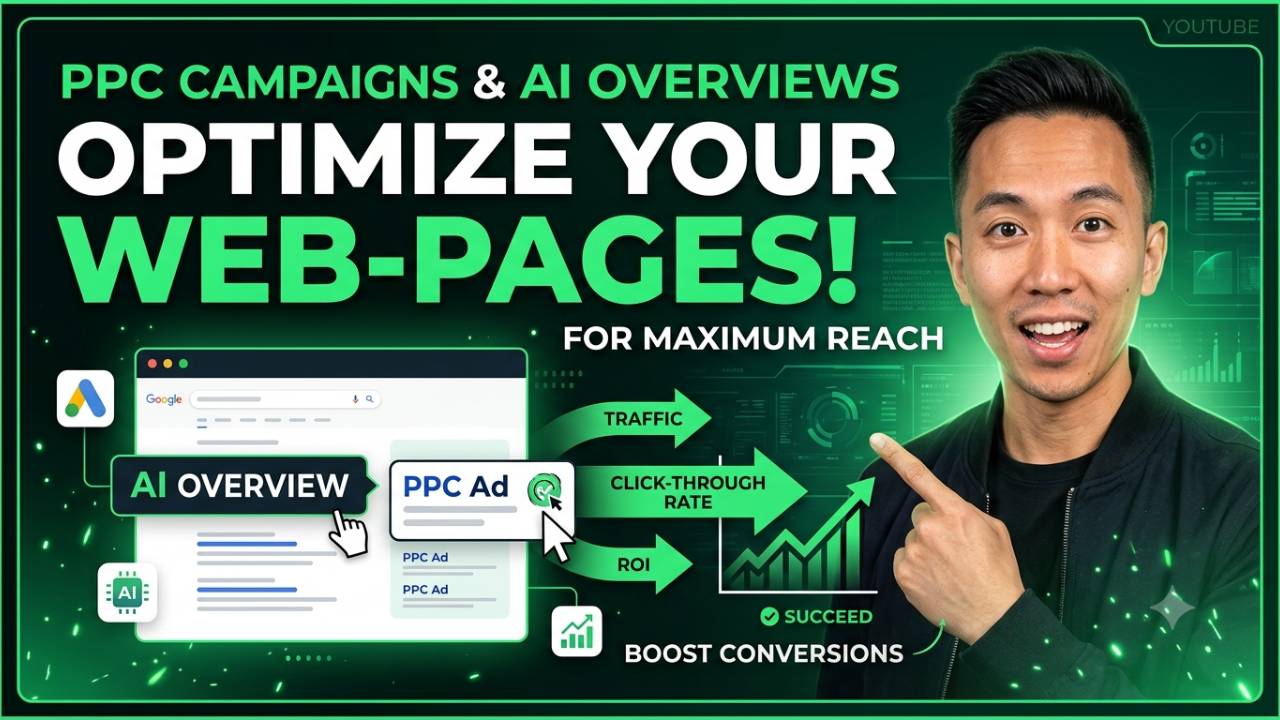
The search engine marketing landscape has shifted dramatically. With Google fully integrating Generative AI into its search architecture through AI Overviews (AIO), user behaviour has fundamentally evolved. Search queries have become longer, conversational, and deeply focused on intent.
For Indian digital marketers and businesses, this transformation directly impacts paid search. Your target audience is no longer just scanning traditional text ads; they are interacting with AI-generated answer blocks that dominate top-of-the-page results.
If you want to maintain high visibility and maximize conversions, mastering how to optimize web pages for PPC campaigns specifically for this AI-first environment is essential. To succeed, your landing pages must serve a dual purpose: they must satisfy Google’s real-time algorithmic requirements for paid ads while matching the advanced natural language processing (NLP) capabilities of Generative Engine Optimization (GEO) and Answer Engine Optimization (AEO).
How AI Overviews Affect PPC Traffic
To build a high-converting landing page, you must first understand the environment where your ads are served. When Google generates an AI Overview at the top of a Search Results Page (SERP), traditional organic and paid formats adapt dynamically. Ads are now seamlessly embedded within or placed immediately around these conversational AI blocks.
The Impact on User Behavior
- Shift to Zero-Click Searches: AI Overviews aggregate data from across the web to give users immediate answers. This means informational queries see a sharp decline in direct organic clicks.
- Concentration on Transactional Intent: Because informational queries are solved directly within the SERP, users who click through your paid ads are further down the funnel. They have high purchasing intent but demand immediate, highly relevant solutions.
- Elevated Relevance Requirements: Google’s AI models analyze the context of a query with extreme precision. If your landing page features a generic copy or fails to immediately validate the ad’s promise, your Quality Score drops instantly, driving your Cost-Per-Click (CPC) up.
The Core Framework: What Makes a High-Converting PPC Landing Page in the AI Era?
An effective PPC landing page must deliver an immaculate user experience while offering structured data that AI models can crawl, understand, and validate instantly.
[Search Query] ➔ [AI-Powered Ad Placement] ➔ [Optimized PPC Landing Page]
|
├── Top Layer: Answer Block (AEO)
├── Mid Layer: Intent Match & Proof
└── Base Layer: Schema & Core Vitals
To achieve this balance, focus optimization on three core layers:
| Layer | Component | Core Objective |
| Top Layer (Structural) | Direct Answer Blocks & TL;DR | Immediate user validation and high compatibility with AI summary formats. |
| Middle Layer (Semantic) | Intent-Driven Content | Precise alignment with transactional queries to improve Quality Score. |
| Base Layer (Technical) | Speed & Schema Markup | Perfect technical health (Core Web Vitals) and machine-readable data. |
Step-by-Step Guide: How To Optimize Web Pages for PPC Campaigns
1. Implement AEO-Friendly Answer Blocks at the Top
When a user clicks on a paid ad from an AI-driven SERP, they expect immediate continuity. If your landing page forces them to scroll through fluff, they will bounce back to the search results.
- Craft a “TL;DR” Summary: Include a concise, bulleted section right below your main hero headline. Summarize exactly what your product or service does and why it solves the user’s specific problem.
- Use H2 Questions as Content Anchors: Structure sections of your landing page around explicit user questions. For example, if you run campaigns for real estate software, use a heading like: “How do I optimize a landing page for PPC campaigns using this automation tool?” Follow this heading immediately with a direct, 40- to 60-word answer. This structure mirrors the exact data formats AI models prioritize.
2. Move Beyond Keywords to Intent-First Semantic Depth
Modern search engines rely on semantic understanding rather than exact-match keyword counts. Your PPC landing page optimization strategy must prioritize topical depth and intent mapping.
- Align Content with Transactional Queries: Group your target phrases naturally within your copy. Ensure high-search keywords like Google Ads landing page best practices, PPC conversion optimization, and how to optimize landing pages for Google Ads are integrated in a contextually meaningful way, avoiding keyword stuffing. Keep your core keyword density balanced between 1 to 2%.
- Build Out Dedicated Pages for Tight Keyword Clusters: Avoid directing all paid traffic to your homepage. If an ad targets “best landing page optimization strategies for paid ads,” the destination page should focus exclusively on tactical landing page architecture, rather than an overview of your entire digital marketing agency suite.
3. Maximize Landing Page Experience for Google Ads Quality Score
Your Quality Score directly determines your ad rank and actual CPC. To systematically improve Quality Score in Google Ads, your landing page must achieve an “Above Average” rating.
- Achieve Precise Message Match: The headline of your landing page must closely echo the headline of your responsive search ad (RSA). A mismatch creates instant friction, leading to immediate drops in engagement metrics.
- Provide Diverse Creative Angles: Ensure your landing page content supports a wide range of ad angles—covering distinct pillars like value propositions, pricing transparency, trust signals, and distinct competitive advantages.
4. Optimize Core Web Vitals for the Indian Mobile Market
The vast majority of search traffic in India relies on mobile devices, often on fluctuating network speeds. Technical optimization is a critical ranking factor for ad performance.
- Keep Mobile Load Times Under 2.5 Seconds: Google’s Quality Score engine penalizes slow-loading pages. Compress images heavily, minify JavaScript, and leverage efficient content delivery networks (CDNs). Aim for a Largest Contentful Paint (LCP) of under 2.5 seconds on mobile connections.
- Eliminate Layout Shifts: Ensure all interactive elements, forms, and buttons load predictably. Accidental clicks caused by shifts in the layout frustrate visitors and trigger immediate bounces.
5. Deploy Advanced GEO Schema and Structured Data
To maximize the likelihood of your landing page being recognized as a trusted source by search algorithms, you must make your page fully machine-readable.
- Integrate Product and FAQ Schema: Apply explicit JSON-LD schema markup to your landing pages. If your page features a pricing table, use Product schema. If it features a common questions section, embed FAQPage schema.
- Format Data Clearly: Use clean HTML tables and bulleted lists to display pricing, specifications, or step-by-step processes. Google’s AI architectures favor structured, highly scannable layouts when pulling data points to verify information accuracy.
Crucial Landing Page Elements for the Indian Audience
Optimizing for the Indian demographic requires subtle localization and deliberate design choices that actively build credibility:
- Incorporate Clear Trust Signals: Explicitly feature clear badges, industry certifications, and security protocols. Display recognizable payment options prominently near your call to action.
- Leverage Social Proof and Video Reviews: Traditional text testimonials can be easily falsified. Prioritize authentic video testimonials, detailed case studies, or embedded third-party reviews (such as Google Business Profile ratings) to build quick rapport.
- Offer Direct, Frictionless Communication: Indian consumers value direct interaction. Ensure your landing page features an easily accessible, one-click WhatsApp chat link or a prominent click-to-call button alongside your standard lead generation forms.
Advanced Checklist for PPC & AI Overview Optimization
To ensure your campaign landing pages are fully optimized for both modern AI algorithms and active human buyers, review this technical and structural checklist:
- Hero Headline Alignment: Ensure your primary H1 matches your top-performing ad copy hooks exactly.
- AI-Friendly Formatting: Include a brief summary block or structured bullet points near the top of the viewport.
- Technical Performance: Verify mobile load time is under 2.5 seconds using PageSpeed Insights.
- Structured Technical Data: Ensure valid JSON-LD schema (Product, FAQ, or Organization) is properly deployed.
- Frictionless Lead Funnel: Verify forms are straightforward to fill out on mobile, and add a direct communication channel like WhatsApp.
- First-Party Data Integration: Ensure your conversion tracking feeds clean offline conversion data (like qualified leads or closed revenue) back into Google Ads to help train smart bidding models accurately.
Conclusion: Future-Proofing Your Paid Search Strategy
Learning how to optimize web pages for PPC campaigns in an era defined by AI Overviews requires shifting from basic keyword placement to advanced semantic depth, impeccable technical performance, and structured, clear answer delivery. By aligning your landing page experience with modern GEO and AEO principles, you protect your campaigns against rising CPCs, boost your Quality Score, and ensure your paid ads continue to capture valuable, high-converting traffic.
Begin by auditing your top-performing ad groups. Identify where your current user experience feels generic, restructure those pages with clear answer blocks, optimize your mobile performance, and build a highly relevant funnel that satisfies both search algorithms and human intent.
